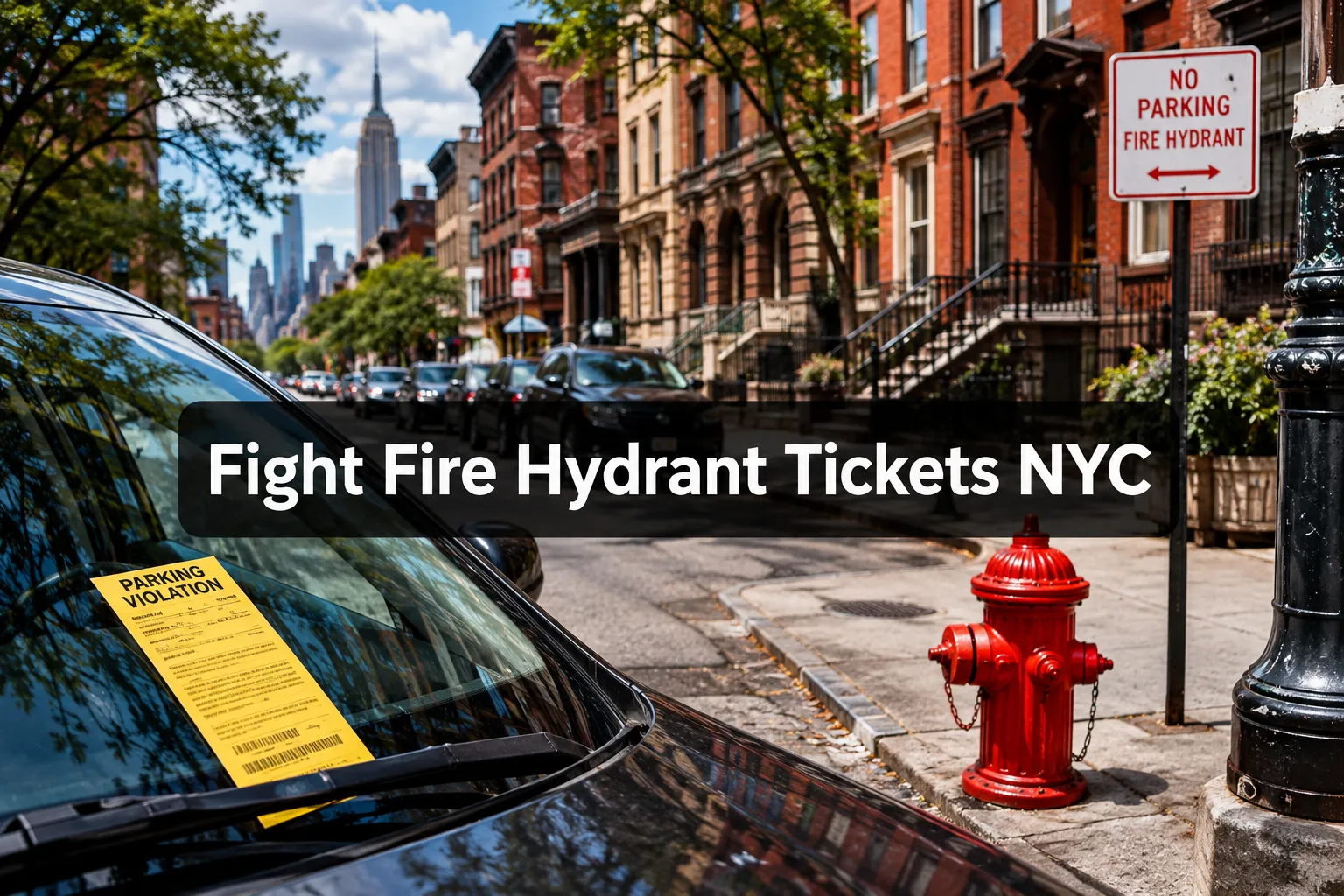
NYC’s Department of Finance issued over 10 million parking tickets in 2025, with fire hydrant violations ranking among the most disputed citations. The $115 fine hits hard, especially when drivers believe they parked legally or when the distance measurement appears questionable.
Learning how to fight a fire hydrant parking ticket in NYC starts with understanding the official rules and your dispute rights. The city requires 15 feet of clearance on either side of every hydrant, but enforcement officers sometimes make measurement errors or fail to document required elements on the summons.[1][3] Those mistakes create valid grounds for dismissal.
This guide walks through the exact steps to challenge a fire hydrant ticket using NYC’s official dispute channels in 2026.
Key Takeaways
- Fire hydrant tickets (Violation 40) carry a $115 fine and require 15 feet clearance from the hydrant on either side
- Contest tickets within 30 days of issuance through NYC DOF’s online portal, mobile app, mail, or in-person to avoid late penalties
- The summons must specify the exact distance in feet your vehicle was from the hydrant, missing or inaccurate measurements are valid defenses
- Submit photographic evidence showing measurements, timestamps, and street context to strengthen your dispute
- Appeal unfavorable hearing decisions for a second review if the initial ruling goes against you
Understanding NYC Fire Hydrant Parking Rules
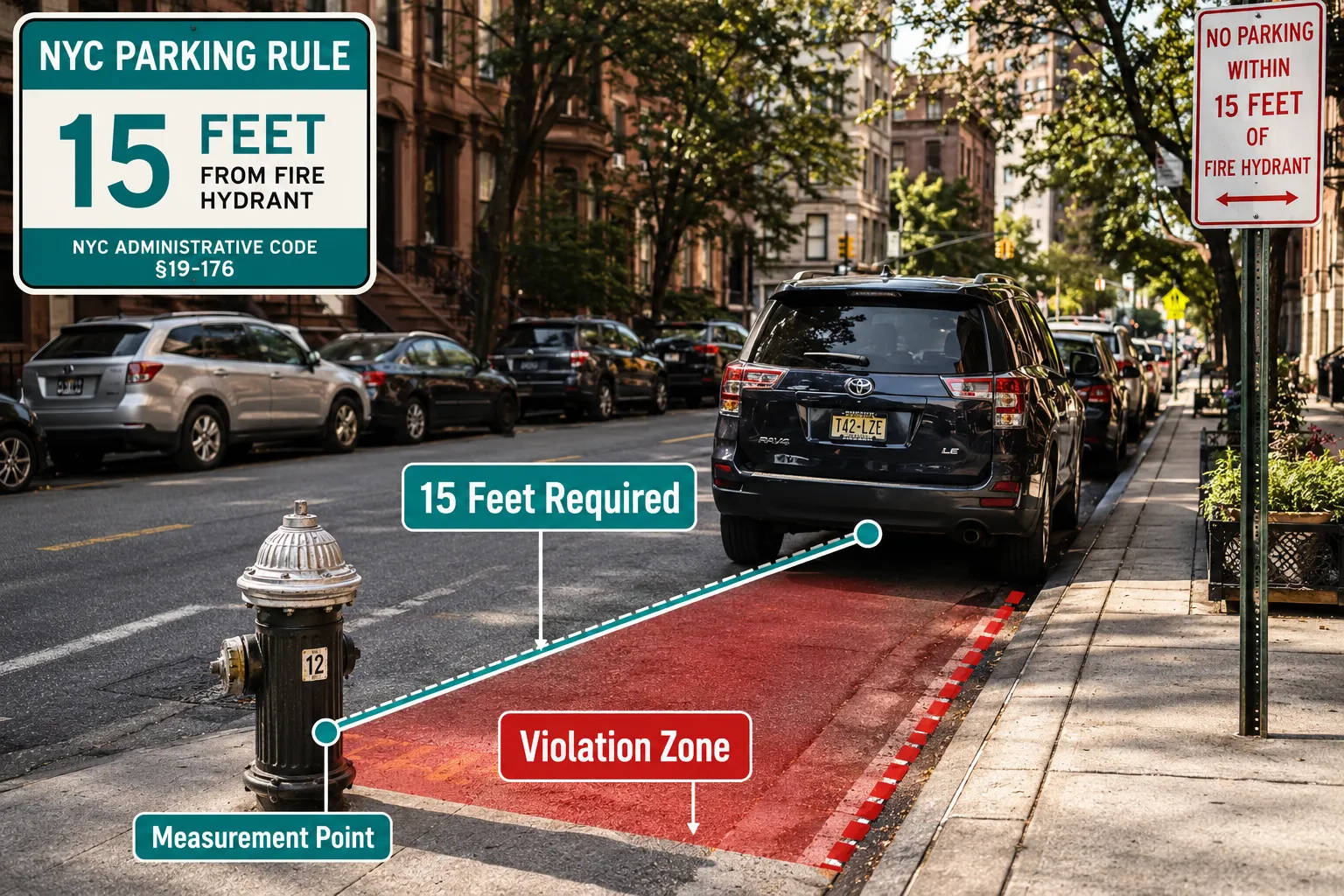
NYC law prohibits stopping, standing, or parking within 15 feet of a fire hydrant on either side.[1][3] This distance applies regardless of street design, including floating parking lanes next to protected bike lanes introduced in recent years.
The NYC Department of Finance codes fire hydrant violations as «Violation 40» with a standard fine of $115 as of the August 2026 penalty schedule.[2] The violation applies 24 hours a day, seven days a week, with no exceptions for brief stops or emergency flashers.
Critical measurement requirement: According to NYC DOF guidance updated July 24, 2026, every fire hydrant summons must specify how far, in feet, your vehicle was parked from the hydrant.[9] This required element becomes the foundation of many successful disputes when officers fail to document it or record inaccurate measurements.
The 15-foot rule differs from other parking regulations. While Alternate Side Parking suspensions and street cleaning schedules vary by neighborhood and calendar, fire hydrant clearance requirements never change. Commercial delivery drivers and residents alike must maintain this distance at all times.
How to Fight a Fire Hydrant Parking Ticket in NYC: Step-by-Step Process
Challenge unfair parking citations through NYC’s official dispute system. The process requires prompt action and proper documentation.
Request a Hearing Within 30 Days
Submit your dispute request within 30 days of the ticket issue date to avoid late penalties and preserve your appeal rights.[4][5][7][10] Missing this deadline triggers additional fines and eliminates your ability to contest the violation.
NYC provides multiple official channels to request a hearing:
Online Portal: Access the NYC DOF Dispute Web portal to enter your violation number and submit a written defense with supporting evidence.[4][8] The system accepts photo uploads showing distance measurements, timestamps, and street context.
NYC Pay or Dispute Mobile App: Download the official app to dispute tickets directly from your phone, upload photos immediately after receiving the citation, and track your case status in real time.[6]
By Mail: Send a written dispute letter to NYC Department of Finance, P.O. Box 29021, New York, NY 10087-9021. Include the violation number, license plate, defense statement, and copies of supporting photos.[5][7]
In Person: Visit any NYC DOF business center to submit your dispute and speak with staff about evidence requirements.[5][10][11]
The entire dispute process can be completed without appearing in person, making it convenient for drivers who work during business hours or live outside the city.[10][11]
Build Your Defense with Required Evidence
Strong fire hydrant defenses focus on measurement accuracy and summons defects. The burden of proof falls on you to demonstrate the vehicle was more than 15 feet from the hydrant.[13]
Effective defense strategies:
Distance measurement evidence: Photograph your vehicle’s position relative to the hydrant immediately after receiving the ticket. Use a measuring tape to document the actual distance. If you can prove the car sat beyond 15 feet, the ticket must be dismissed.
Missing required elements: Review the summons for the distance specification required by NYC DOF.[9] If the officer failed to record how many feet your vehicle was from the hydrant, argue the ticket lacks a required element and should be dismissed.
Inaccurate measurements: Challenge the officer’s recorded distance with your own photographic evidence and measurements. Enforcement agents sometimes estimate distances without measuring, creating opportunities for successful disputes.
Obstructed or hidden hydrants: Document if snow, construction barriers, or overgrown vegetation obscured the hydrant from view. While not always successful, these defenses work when the hydrant was genuinely invisible to a reasonable driver.
Time and date verification: If the ticket shows an impossible time (you have proof you were elsewhere) or incorrect plate information, document these errors thoroughly.
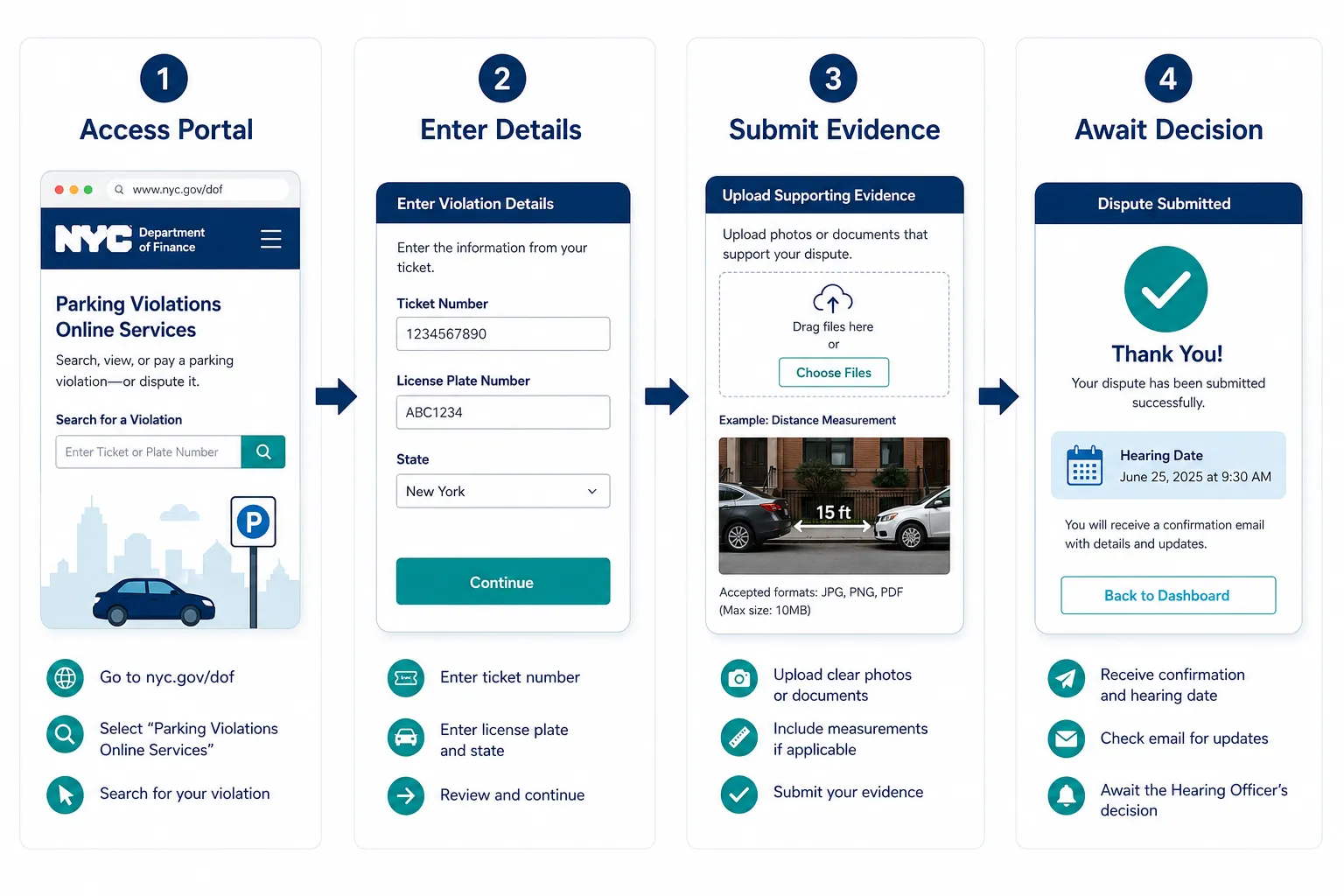
Submit Your Dispute Through Official Channels
Access the NYC DOF searchViolation portal to begin your online dispute.[8] Enter the violation number from your ticket and follow the prompts to upload evidence and write your defense statement.
Writing an effective dispute statement:
Keep your written defense clear, factual, and specific. State the exact distance your vehicle was from the hydrant (with photo evidence). Reference the required elements guidance if the officer failed to document distance.[9] Avoid emotional language, focus on facts and measurements.
The Office of the Parking Summons Advocate (OPSA) can help you understand your rights and evidence strategies for hydrant cases, according to their mission statement updated August 12, 2026.[15]
Appeal Unfavorable Decisions
If the initial hearing decision goes against you, NYC DOF’s dispute system confirms you have the right to appeal.[4][7] The appeal gives you a second chance to argue the hydrant rule was misapplied or the ticket’s required elements were defective.
Submit your appeal through the same channels used for the initial dispute, online, by mail, or in person. Include any additional evidence you’ve gathered and address specific points from the hearing officer’s decision.
Appeals work best when you can demonstrate clear errors in the original ruling or present new evidence that wasn’t available during the initial hearing.
Common Mistakes That Weaken Your Fire Hydrant Ticket Defense
Avoid these errors that reduce your chances of dismissal:
Waiting too long to dispute: The 30-day window is firm. Late disputes face automatic penalties and limited review.[4][5][7][10]
Failing to measure and photograph immediately: Distance evidence collected weeks after the ticket carries less weight than photos taken the same day.
Arguing you were «only there for a minute»: Duration doesn’t matter. The 15-foot rule prohibits stopping, standing, and parking, even briefly.[2][3]
Submitting blurry or unclear photos: Evidence must clearly show the hydrant, your vehicle, and the distance between them. Invest time in quality documentation.
Ignoring required summons elements: Always check whether the officer documented the distance in feet. This required element, when missing, provides grounds for dismissal.[9]
Giving up after an initial denial: Exercise your appeal rights. Many successful disputes win on appeal after presenting additional evidence or identifying errors in the first ruling.[4][7]
Alternative Solutions: Avoid Fines and Towing Before They Happen
Prevention beats disputing tickets after the fact. Use real-time parking information to avoid violations entirely.
Check Real-Time Status for current Alternate Side Parking rules and suspension calendars that affect legal parking spots citywide. Understanding when street cleaning occurs helps you identify safe parking zones that keep you clear of hydrants and other restrictions.
Explore off-street parking options in your neighborhood through the NYC Parking Directory. Garages and lots eliminate the risk of fire hydrant tickets entirely, especially in high-enforcement areas.
Commercial delivery drivers operating across multiple boroughs benefit from checking Yonkers, Mount Vernon, and other municipal parking rules when making deliveries outside NYC proper.
Study the complete guide to NYC parking regulations to understand how fire hydrant rules interact with other restrictions like street cleaning, commercial loading zones, and residential permit areas.
Similar dispute strategies apply to other parking violations. Learn how to fight a double parking ticket in NYC using the same evidence-based approach.
Conclusion
Fighting a fire hydrant parking ticket in NYC requires quick action, precise evidence, and knowledge of official dispute procedures. Request your hearing within 30 days through the NYC DOF online portal, mobile app, mail, or in-person channels. Focus your defense on measurement accuracy, required summons elements, and photographic documentation proving your vehicle sat beyond the 15-foot legal threshold.
Check the summons for the required distance specification, missing or inaccurate measurements create valid grounds for dismissal. Submit clear photos showing the hydrant, your vehicle, and the distance between them. Exercise your appeal rights if the initial decision goes against you.
Take action now:
- Access the NYC DOF Dispute Web portal to start your dispute today
- Photograph your vehicle’s position relative to the hydrant before moving it
- Measure the actual distance and document it thoroughly
- Submit your dispute within 30 days to avoid late penalties
- Check Real-Time Alternate Side Parking Status to prevent future violations
The $115 fine and potential towing costs justify the effort to mount a proper defense. Thousands of NYC drivers successfully dispute fire hydrant tickets each year by following these official procedures and presenting strong evidence.
References
[1] Article – https://portal.311.nyc.gov/article/?kanumber=KA-01026
[2] Services Violation Codes – https://www.nyc.gov/site/finance/vehicles/services-violation-codes.page
[3] Parking Regulations – https://www.nyc.gov/html/dot/html/motorist/parking-regulations.shtml
[4] Dispute Web – https://www.nyc.gov/site/finance/vehicles/dispute-web.page
[5] Dispute A Ticket – https://www.nyc.gov/site/finance/vehicles/dispute-a-ticket.page
[6] Nyc Pay Or Dispute – https://www.nyc.gov/site/finance/vehicles/nyc-pay-or-dispute.page
[7] Dispute A Ticket Faqs – https://www.nyc.gov/site/finance/vehicles/dispute-a-ticket-faqs.page
[8] Searchviolation – https://nycserv.nyc.gov/HBWNonCommercial/dispute/searchViolation.action
[9] Required Elements In A Ticket – https://www.nyc.gov/site/finance/vehicles/required-elements-in-a-ticket.page
[10] Parking And Camera Tickets – https://www.nyc.gov/main/services/parking-and-camera-tickets